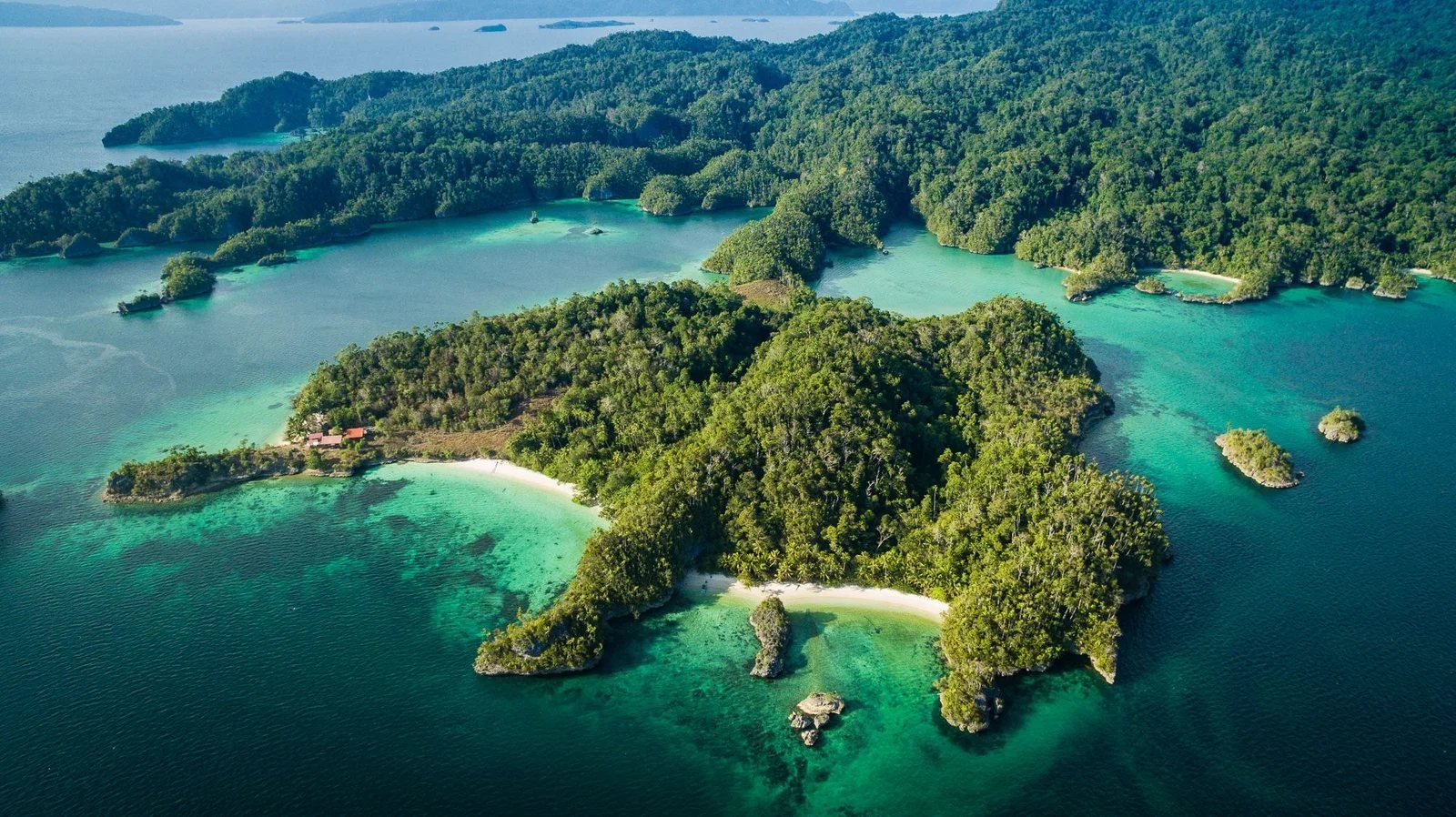
There is no useful answer to the question of whether Triton Bay or Raja Ampat is “better.” They sit within the same broad corner of eastern Indonesia, both offer serious diving, and both can justify the journey to Papua. Yet underwater, above the surface and in the rhythm of a liveaboard voyage, they feel strikingly different.
Raja Ampat is the more famous name. Its scale is enormous, its marine biodiversity is globally significant, and a longer voyage can move through current-fed reefs, manta areas, limestone lagoons, shallow coral gardens and remote southern islands without the destination ever feeling repetitive. Triton Bay, near Kaimana, is less immediately polished. Visibility can be modest. The water can look greener. The reefs often reveal themselves at close range rather than across a wide blue panorama. In return, divers encounter extraordinary soft-coral growth, black-coral structure, fish-filled reef faces and a sense that the destination has not been arranged around tourism.
For someone actively comparing a Raja Ampat liveaboard with a Triton Bay liveaboard, the choice should come down to what kind of diving produces the most satisfaction, how important topside scenery is, how much variety is wanted from one voyage, and how comfortable the group is with conditions that can be less visually predictable.
The short answer: choose by temperament, not reputation
Choose Raja Ampat when the priority is range. It suits travellers who want a destination that keeps changing: one day a current-fed reef alive with schooling fish, another day a sheltered coral garden, then a limestone viewpoint, a village, a manta-cleaning area or a long passage toward Misool. The destination has enough geographic breadth to support several different kinds of voyage.
Choose Triton Bay when the priority is intimacy. It suits divers who are comfortable getting close to the reef, working with variable visibility, slowing down for macro subjects and accepting that the strongest moments may come from texture, colour and density rather than from distant visibility. The surface landscape is quieter, the number of visiting vessels is usually lower, and a wildlife encounter near traditional fishing platforms can become part of the journey without defining its entire value.
Divers who want maximum variety, strong biodiversity, celebrated reef systems, large-scale scenery and enough geographic range for a longer liveaboard route.
Divers drawn to soft corals, black-coral growth, close-range photography, quieter anchorages and a destination that still feels exploratory rather than familiar.
Raja Ampat is about range
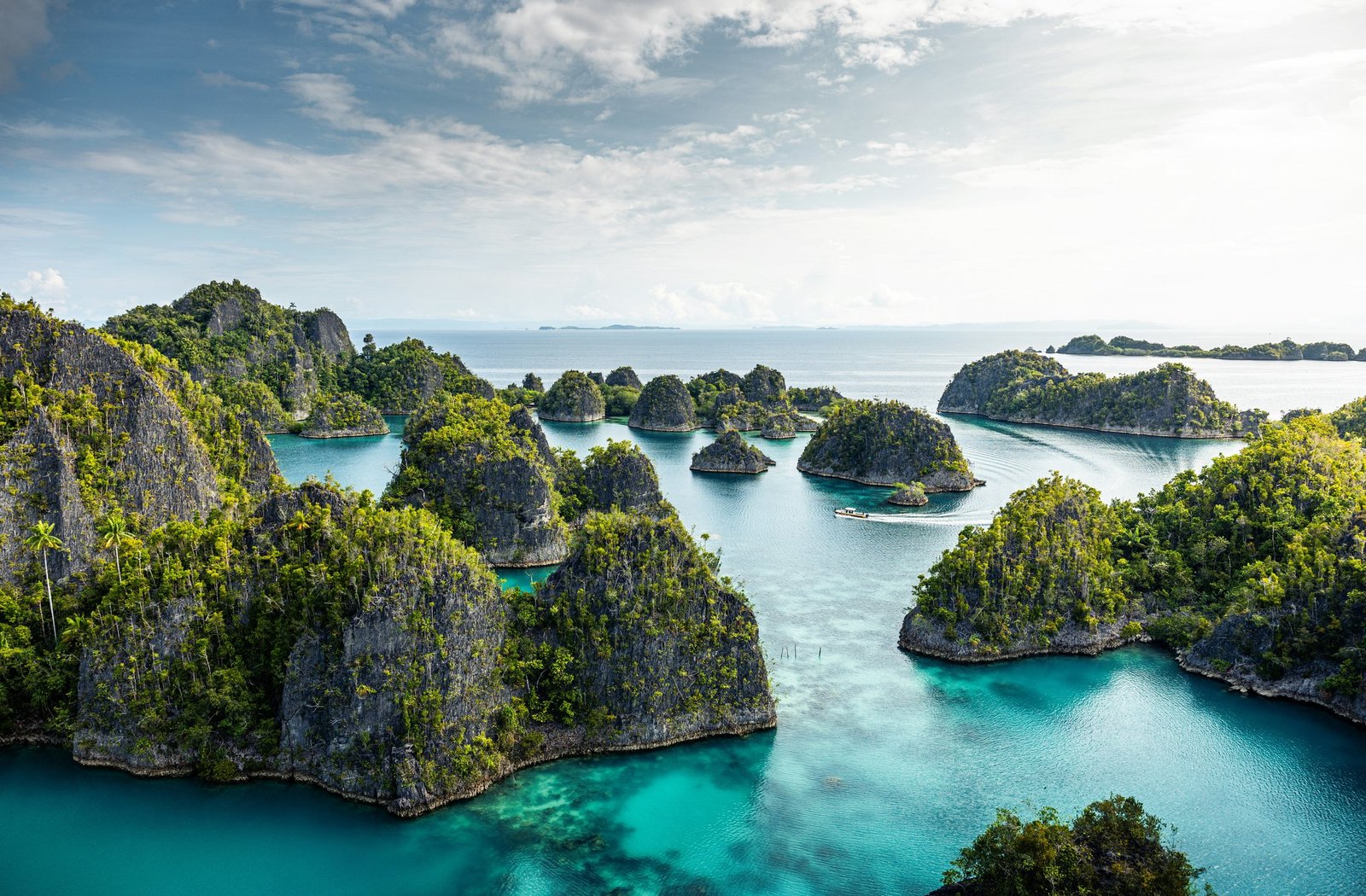
The most important thing to understand about Raja Ampat is its scale. The destination is not one reef system gathered around one harbour. It stretches across a large archipelago of forested islands, karst formations, channels, mangroves and marine protected areas. A liveaboard matters here because the vessel can move between regions instead of repeatedly returning to the same base.
North and central Raja Ampat, including the Dampier Strait, are associated with current-fed reefs, schooling fish and well-known diving around areas such as Cape Kri. Southern Raja Ampat around Misool has its own character, with soft-coral reefs, dramatic limestone formations and longer distances between inhabited areas. A longer itinerary can connect these environments while allowing time for snorkelling, kayaking, shore visits and viewpoints between dives.
UNESCO describes Raja Ampat as a marine environment with exceptional biodiversity, including reefs that host more than three quarters of known coral species and more than a thousand species of coral reef fish. That scientific importance is not something a diver needs to recite underwater, but it helps explain why the region can feel so relentlessly varied from one site to the next.
Triton Bay is about proximity
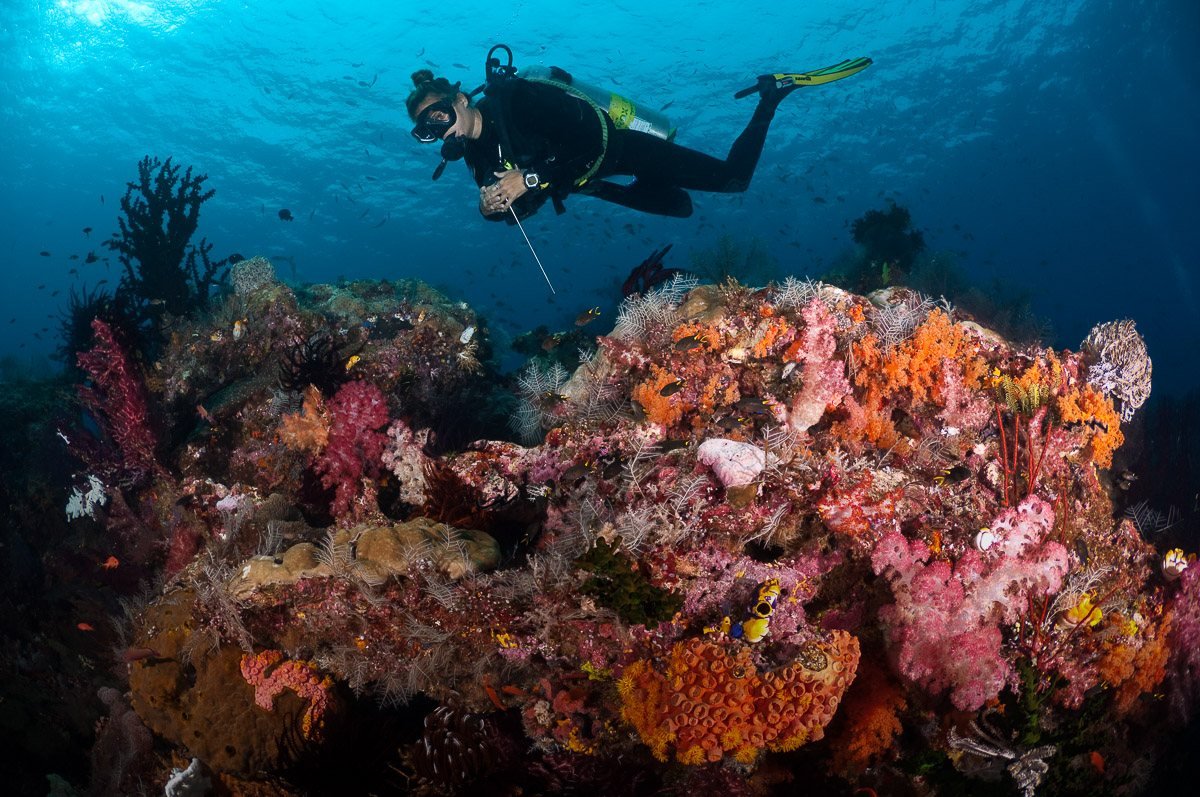
Triton Bay often makes its strongest impression when the diver stops expecting Raja Ampat. The water can carry more nutrients and less clarity. Instead of looking across a vast blue scene, the eye is pulled toward what is close: soft corals layered across a reef face, black-coral bushes creating structure, schooling fish moving through limited visibility, or a small subject discovered while the current eases.
This is one of the reasons experienced photographers often speak about Triton Bay differently. Lower visibility is not automatically a defect. Nutrient-rich water is part of the ecological story, and the density of life can make a short visual range feel intensely full. Wide-angle photography becomes more about colour close to the lens and less about creating a distant, crystal-clear blue-water composition.
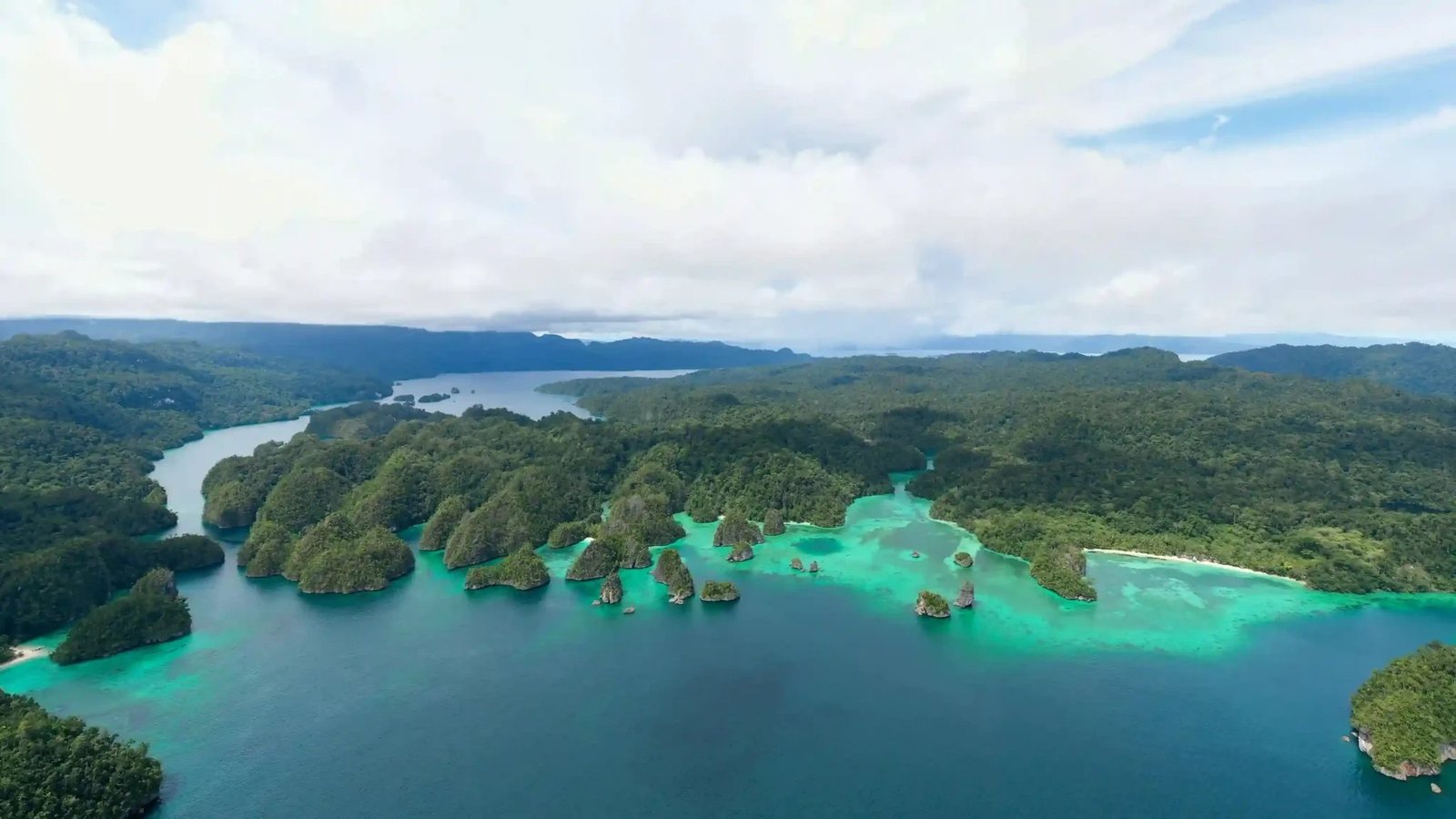
There is also a different emotional quality above the water. The coastline around Kaimana and Triton Bay includes limestone islands, forested shorelines and long stretches with little visible development. Traditional fishing platforms, local access arrangements, rock-art areas and village permissions can influence the route. The resulting voyage feels less like moving through a set of famous landmarks and more like entering a remote working seascape.
Raja Ampat often impresses through abundance and variety. Triton Bay often impresses through closeness, colour and the feeling of having reached somewhere less travelled.
The underwater difference is not simply biodiversity versus soft coral
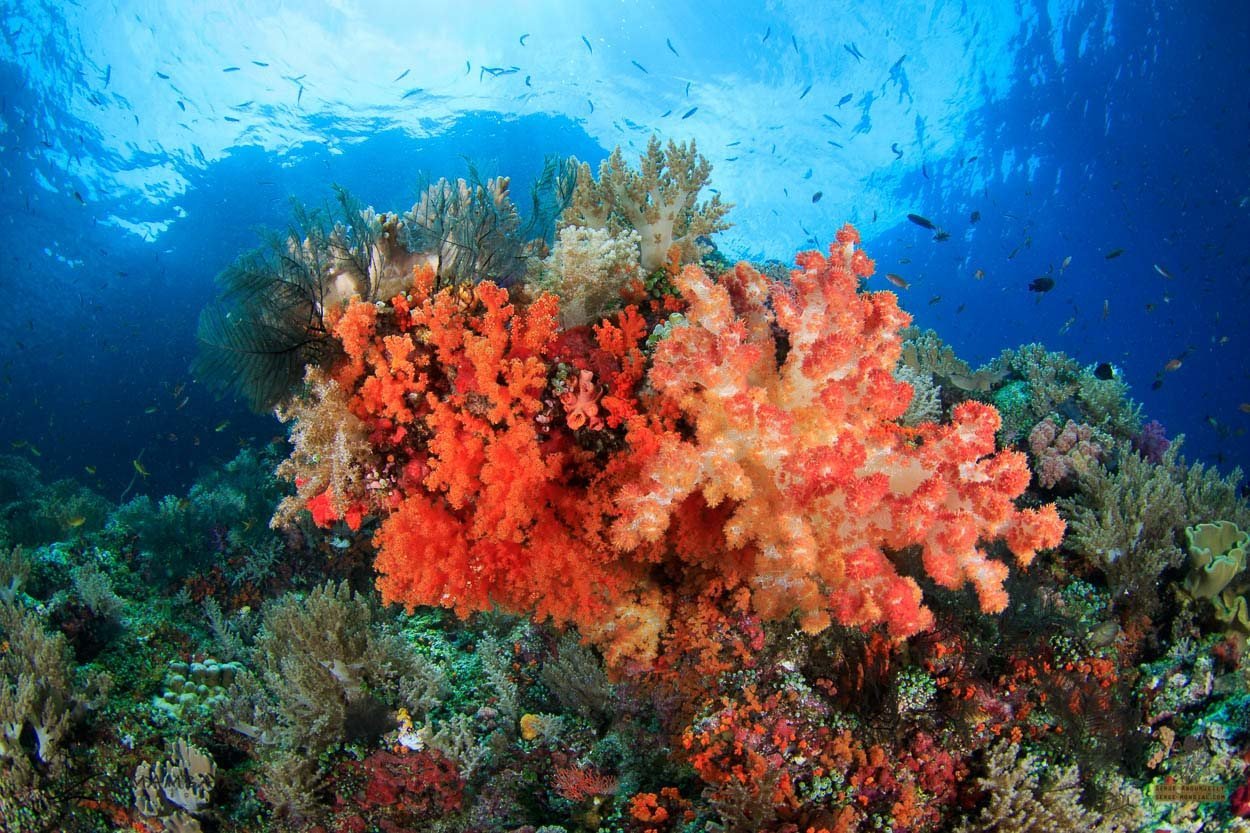
It is tempting to reduce the comparison to a slogan: Raja Ampat for biodiversity, Triton Bay for soft coral. That is too simple. Raja Ampat has extraordinary soft-coral environments of its own, particularly around Misool, while Triton Bay contains far more than coral gardens. The more useful distinction is how each destination presents its life to the diver.
In Raja Ampat, current can concentrate fish over exposed reefs and pinnacles. Manta rays, schooling fish, turtles, reef sharks and dense coral cover may all form part of a voyage, but the specific mix changes with region and conditions. There is often a sense of spatial scale: the reef continues, fish move through open water, and another completely different environment may wait at the next anchorage.
In Triton Bay, the reef can feel visually compressed. Fish, coral and macro life occupy a more intimate frame. Wobbegongs, walking sharks, nudibranchs and pygmy seahorses are among the subjects associated with the broader southern Bird's Head region, while the soft-coral and black-coral growth can dominate the overall character of a dive. Divers who are comfortable looking carefully rather than racing through a site often understand the appeal quickly.
Visibility matters more in this decision than many trip pages admit
If clear blue water is central to the way someone judges a dive, Raja Ampat will usually be the easier choice. Visibility still changes by site, tide, weather and season, but the destination is better known for the kind of broad underwater scenes many travellers imagine before reaching Papua.
Triton Bay demands a more flexible definition of a good dive. Visibility commonly varies and can be modest. Freshwater influence and nutrient-rich conditions are part of the environment. A diver who becomes frustrated whenever the water is not clear may overlook precisely what makes the destination unusual.
For photographers, this distinction is especially important. A wide-angle specialist who wants blue-water reefscapes may lean toward Raja Ampat. A photographer happy to work close, use strobes carefully and alternate between wide-angle reef detail and smaller subjects may find Triton Bay deeply rewarding.
For wildlife, think in terms of probability rather than a checklist
Neither destination should be chosen because a brochure appears to promise one animal. Raja Ampat is associated with manta encounters, reef sharks, turtles and extraordinary fish diversity, but marine wildlife remains wild. Triton Bay is known for opportunities to encounter whale sharks near traditional fishing platforms, yet those encounters depend on fishing activity, animal movement, local conditions and how the crew assesses the situation.
The better question is whether the destination would still feel worthwhile if the most hoped-for animal did not appear. In Raja Ampat, the answer is usually supported by the enormous variety of reefs and landscapes. In Triton Bay, it should be supported by the reef itself: soft corals, black coral, fish life, macro subjects and the quieter character of the coast.
Above the water, Raja Ampat has the stronger visual theatre
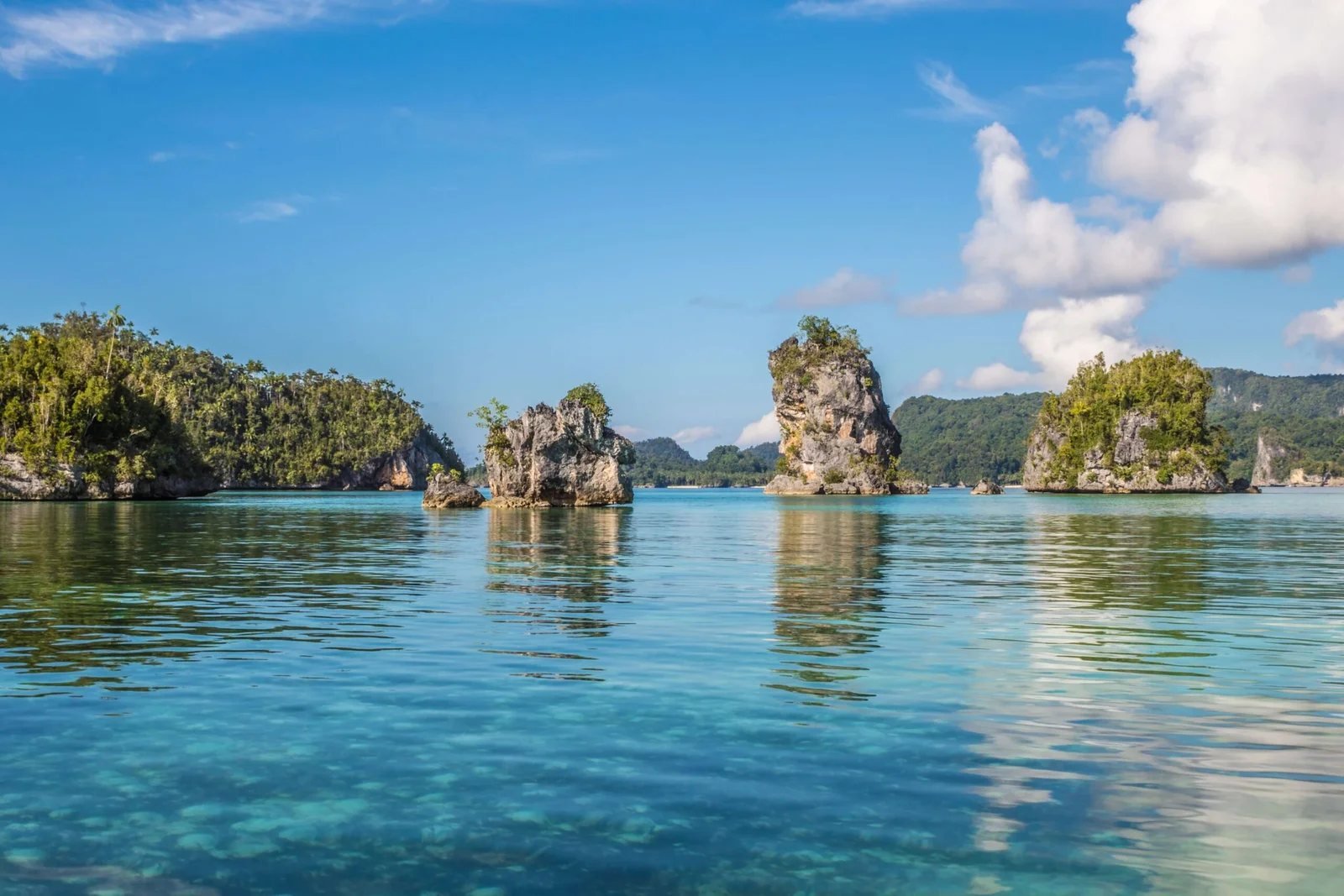
For mixed groups, photographers and travellers who care as much about the hours between dives as the dives themselves, Raja Ampat has a clear advantage in iconic above-water scenery. Limestone islands, sheltered lagoons, viewpoint climbs, mangrove channels and beaches create a strong sense of place even on a day when someone does not enter the water.
That makes Raja Ampat particularly well suited to couples or groups where not everyone is a dedicated diver. Snorkelling can be excellent in shallow coral areas, while kayaking, paddleboarding, tender excursions and short land visits give non-divers a meaningful itinerary. Supraba's diving and leisure programme is designed around this shared-voyage idea rather than treating non-divers as passengers waiting for the dive group to return.
Triton Bay can also work for non-divers, especially travellers interested in remoteness, whale-shark opportunities, kayaking, coastal scenery or cultural stops where access is agreed. The difference is that the destination is more dive-led. Someone who wants a long list of iconic land excursions may find Raja Ampat easier to appreciate.
Which destination suits an experienced diver?
Experience alone does not determine the answer. A highly experienced diver may love Raja Ampat for energetic current, dense fish life and the ability to move between very different reef systems. Another may prefer Triton Bay precisely because it is less famous, less visually predictable and rewards patient observation.
What matters more is confidence in changing conditions. Raja Ampat can include strong current. Triton Bay can combine variable visibility, current and remote diving. In both places, the cruise director and dive guides need room to change the plan according to what is actually happening in the water. Guests should choose a voyage based on the published route, their own qualifications and comfort, and the operator's safety and diving procedures, not on a fixed list of dive sites copied from a previous season.
Which destination works better for a first West Papua liveaboard?
For many travellers, Raja Ampat is the more natural introduction. It is easier to understand before arrival because the destination offers so many different kinds of reward. Even if current changes a planned dive or a particular animal does not appear, the wider journey still has substantial depth.
Triton Bay makes more sense when its specific character already sounds attractive. If the words “lower visibility” immediately feel disappointing, it may not be the right first choice. If those same words suggest nutrient-rich reefs, closer photography and a different kind of underwater atmosphere, Triton Bay may be exactly the reason to travel farther.
Supraba generally positions in Raja Ampat during the principal October through April liveaboard season. Triton Bay is also principally planned from October through April, after the rougher southeast-monsoon period. Weather, visibility, current and wildlife activity still vary inside those windows, so the individual departure route matters more than choosing a month from a generic calendar.
Logistics can make the decision for you
Raja Ampat voyages usually use Sorong as the principal gateway. Triton Bay voyages use Kaimana, with some itineraries operating as complete Kaimana routes and others forming transitions toward Raja Ampat or the Banda Sea. Flight schedules, available departure dates and the amount of time available before and after the cruise can therefore become practical deciding factors.
This is one reason it is better to compare actual published departures rather than destinations in the abstract. A longer Raja Ampat route that reaches both northern and southern areas is a different proposition from a shorter central itinerary. A Triton Bay voyage that remains around Kaimana is different from a transition expedition linking regions.
A liveaboard changes what is possible in both places
Both destinations make more sense when the vessel is understood as a moving base rather than simply accommodation. The value comes from waking close to the day's first reef, moving while guests eat or rest, and reaching anchorages that would be inefficient to visit repeatedly from shore.
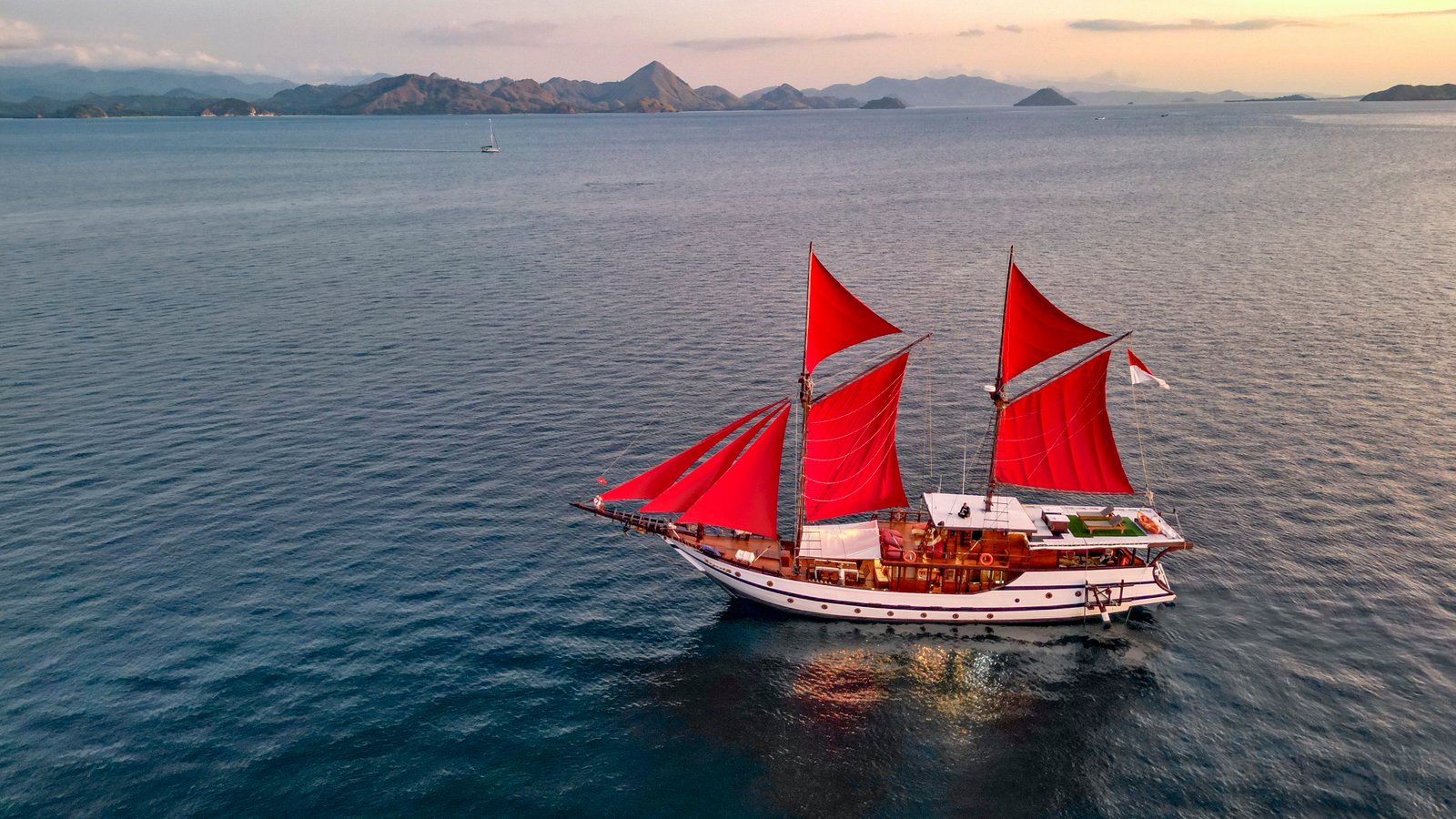
Aboard Supraba, six en-suite cabins, indoor and outdoor dining areas, a sun deck and dedicated water-access areas create the practical framework for those movements. Readers comparing destinations should also compare the vessel itself and the cabin arrangements, because the quality of a remote liveaboard trip is shaped as much by the hours between activities as by the dive sites.
So, Triton Bay or Raja Ampat?
Choose Raja Ampat for breadth: greater geographic range, exceptional biodiversity, strong above-water scenery and a voyage that can satisfy divers, snorkellers and leisure travellers at the same time.
Choose Triton Bay for concentration: quieter waters, dense soft-coral and black-coral environments, close-range photographic possibilities, remote coastlines and a style of diving that rewards curiosity more than perfect visibility.
Neither choice is a compromise. They answer different versions of the same question: what do you want to feel when the tender drops you beside a reef in West Papua?
If the answer is movement, variety and a destination large enough to keep changing around you, start with Raja Ampat. If the answer is intimacy, unusual reef character and a place that still feels slightly outside the usual liveaboard conversation, explore Triton Bay.