Many liveaboard enquiries are quietly shaped by one hesitation. A diver is excited. Their partner is interested in the destination but does not dive. Or a family includes both certified divers and guests who prefer snorkelling, reading, kayaking or simply spending time at sea. The worry is understandable. People imagine a boat built entirely around tanks, briefings and long underwater sessions, with everyone else left wondering how to fill the day.
That picture can be true on some trips, especially on boats designed almost exclusively for dedicated dive operations. It is not the only model. A liveaboard such as Supraba works differently because the experience is built around the voyage as a whole. Diving matters, but so does the rhythm of life on board, the time spent between islands, the quality of meals, the comfort of the cabins and the possibility for different guests to enjoy the same day in different ways.
The important point is not whether non-divers can be physically present on a liveaboard. Of course they can. The more useful question is whether they will feel that the trip still belongs to them. When the answer is yes, a mixed group becomes much easier to plan and much easier to book.
A liveaboard is not only a platform for diving
The phrase liveaboard can create the wrong impression because it sounds purely functional, as though the boat exists only to carry divers from one site to the next. In practice, a well-run voyage is closer to a floating base for travel through remote regions. Guests wake in a new anchorage, share meals, move through striking coastal scenery, step ashore when the route allows, spend time on deck and experience parts of Indonesia that are difficult to understand fully from land.
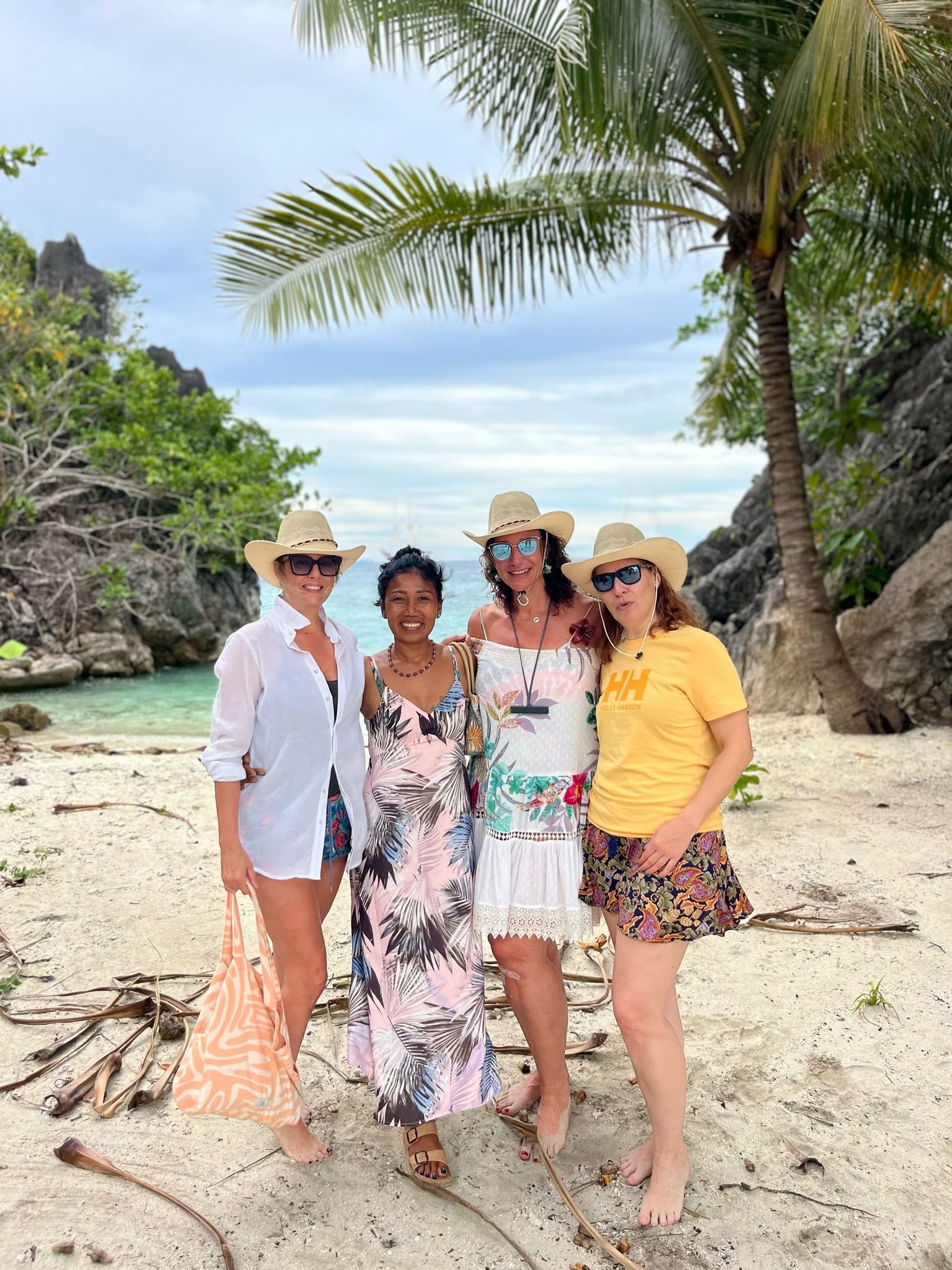
Divers happen to access one part of that landscape by entering the water with tanks. Non-divers access it differently. They may snorkel in sheltered areas, join shore visits, use a paddleboard or kayak where conditions permit, read in the lounge, enjoy the view from the upper deck or simply experience the pleasure of moving through the archipelago at the pace of a boat. On Supraba, the common spaces and guest cabins are part of that equation. If the boat itself is pleasant to inhabit, the hours between activities do not feel like waiting time.
The best mixed-group liveaboard trips are not built around the idea that everyone must do the same thing. They work because the boat makes space for different versions of the same day.
What the day actually looks like when some guests dive and some do not
On a typical voyage, divers begin with the usual structure: an early wake-up, light breakfast, briefing and the first dive of the day. That does not mean the entire boat becomes inaccessible or joyless for everyone else. While diving operations are under way, non-divers still have their own pace. Some enjoy the quiet of the morning on deck. Others sleep a little longer, take coffee with the changing scenery or prepare for a later activity.
Once the dive group returns, the day comes back together. Breakfast becomes a shared meal. The route continues. If the next stop offers calm conditions for snorkelling, paddleboarding or a shore landing, non-divers have their own active moment while divers rest, review images or prepare for the next dive. On some days everyone converges again for a beach visit, a scenic cruise through limestone islands or a long lunch while the vessel repositions.
The key is that non-divers are not asked to imitate the dive schedule. They are not passive spectators waiting for tanks to be refilled. The voyage simply recognises that their engagement comes through a different mix of water time, topside activities and onboard comfort.
What non-divers usually enjoy most
Not every non-diver wants the same trip. Some are enthusiastic snorkellers and spend a great deal of time in the water. Others have little interest in masks and fins but love boats, photography, birdlife, volcanic landscapes or simply the calm that comes from being away from a crowded shore. Because of that, the success of a mixed group depends less on the label non-diver and more on the kind of traveller that person already is.
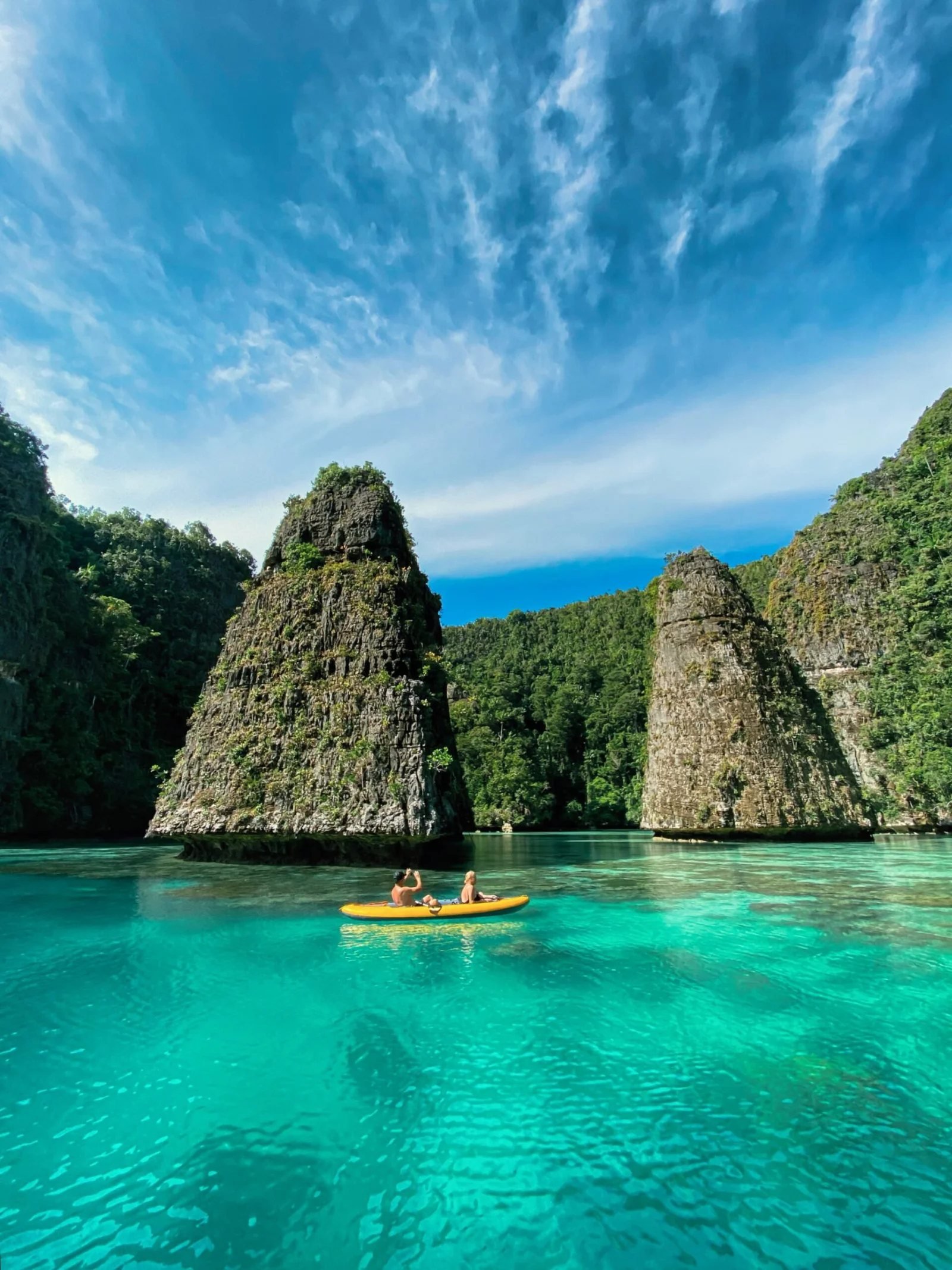
A guest who loves natural scenery often enjoys destinations such as Raja Ampat and Komodo because the topside experience is strong even before anyone enters the water. Limestone islands, beaches, viewpoints and passages between remote anchorages give shape to the day. A guest who values quieter water activities may be drawn to snorkelling opportunities, a kayak session or a relaxed swim from the support tender when conditions allow. A guest who simply wants time away from the usual pace of life may care most about the deck, the horizon and the space to sit with a book after breakfast.
What tends not to work is assuming that every non-diver must be entertained constantly. Many are perfectly happy with a slower rhythm than the diving guests. What they need is not a packed programme. They need a trip where the environment and the boat themselves are enjoyable enough to sustain that slower rhythm.
Choose the route for the whole group, not only for the strongest diver.
If your group includes both divers and non-divers, the most important decision is often the destination. Scenery, shore access, snorkelling potential and overall route character can matter as much as the diving itself.
Shared time matters more than people expect
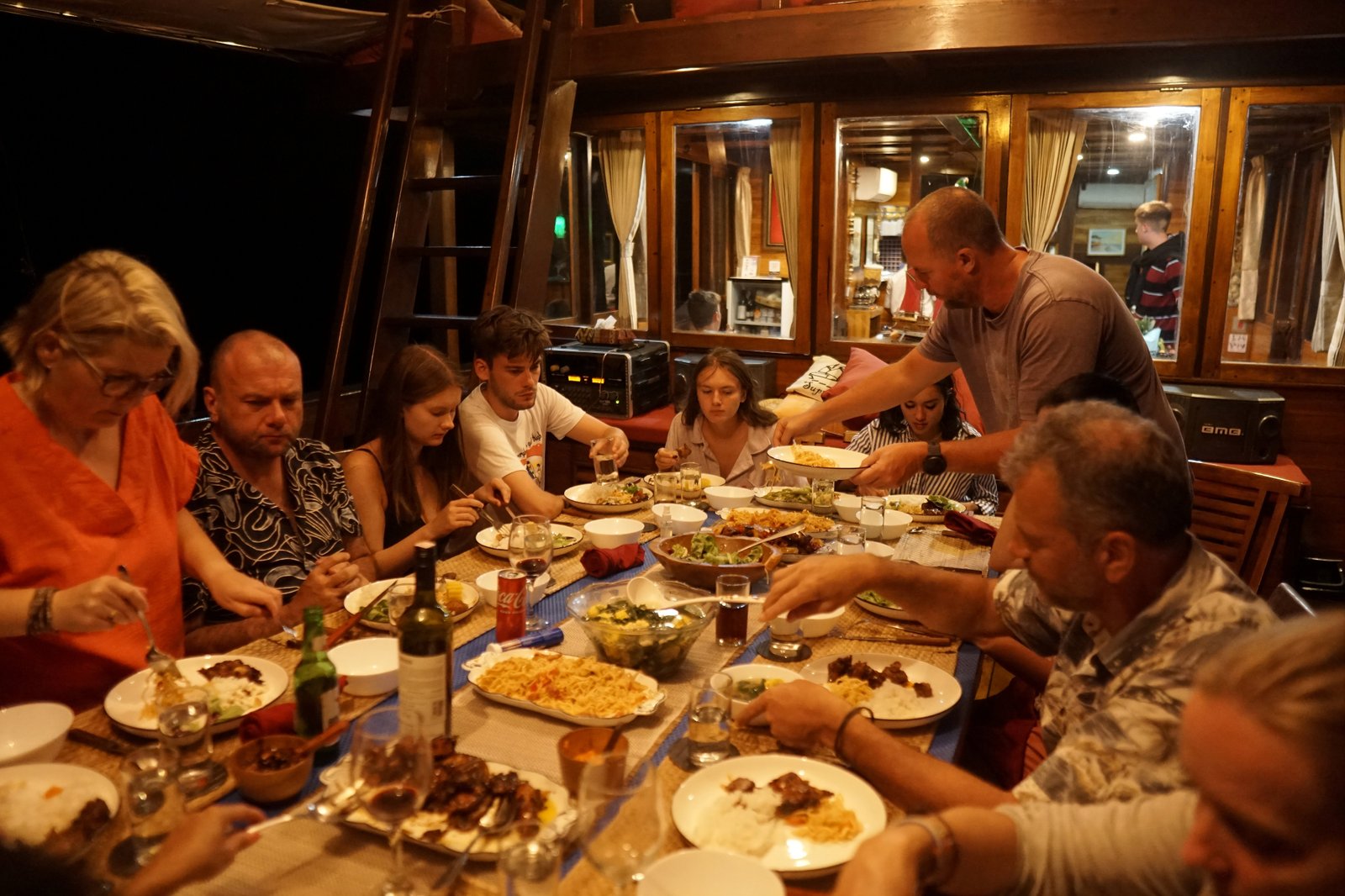
The strongest mixed-group trips are not defined only by what each guest does separately. They are defined by when the group comes back together. That usually happens at meals, during scenic cruising, during shore visits and in the quieter hours of the late afternoon and evening. On Supraba, the shared spaces on board matter for precisely this reason. When people gather around the table after a dive, exchange stories from the day or watch the light change over the islands from the deck, the trip begins to feel collective again.
This is particularly important for couples in which only one person dives. The non-diving partner is rarely asking to be separated from the group all day. In most cases, they simply want confidence that the trip will still provide real shared time and that the entire journey will not disappear into technical routines they cannot join. When the social life of the boat is warm, calm and unforced, that concern usually softens very quickly.
Choosing the right destination makes a major difference
A mixed group does not need a special destination, but some routes are easier than others. Raja Ampat works well for many groups because even guests who never dive can still appreciate the island scenery, shallow lagoons, beaches and opportunities for snorkelling. Komodo has a similar advantage because the experience is not only underwater. There are island landscapes, shore excursions and a stronger sense of dramatic place above the surface.
Other routes may appeal more to guests who are already comfortable with the idea of a remote expedition. Triton Bay and the Banda Sea can be extraordinary, but the right fit depends on how excited the non-diving guests are by the broader journey and not just by the destination name. This is one reason it helps to speak with the team before booking rather than assuming every route functions in exactly the same way.
What to clarify before booking
The most useful conversations happen before the trip is confirmed. Does the non-diving guest enjoy snorkelling, or do they prefer to stay dry? Are they happy with a slower day on board, or do they expect frequent shore activity? Is the group choosing a route because one diver wants a highly specialised itinerary, or because everyone is drawn to the overall region? These questions are not obstacles. They are simply the practical details that determine whether the voyage will feel balanced.
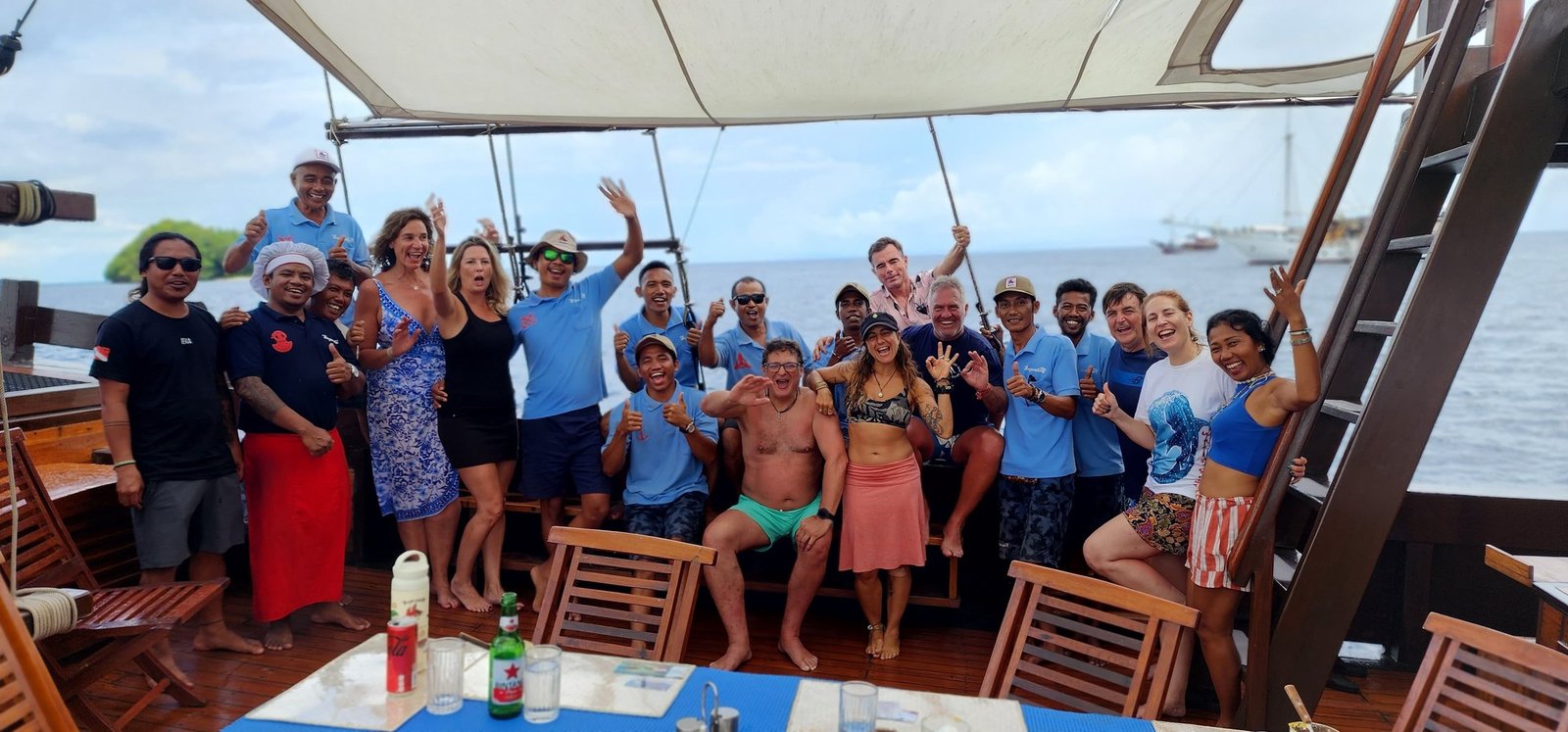
It is also sensible to review cabin comfort, layout and privacy. On a multi-day trip, the quality of the accommodation matters to everyone, not only to the guest who dives. The same is true of meals, the style of service and the safety standards on board. Guests who are not fixated on dive briefings often notice these details most clearly, which is why pages such as Safety and The Vessel are just as relevant to mixed groups as the destination pages themselves.
When a mixed-group liveaboard may not be the right choice
A helpful article should also say what does not work. If a non-diving guest actively dislikes boats, dislikes remote travel and has no interest in water, scenery or quiet time at sea, a liveaboard may not be the best holiday for them. The same is true if the diver in the group wants an intensely technical schedule with little space for compromise or shared time. In those cases, honesty leads to a better plan than optimism.
But many travellers fall somewhere in the middle. They are not divers, yet they do enjoy beautiful coastlines, marine life seen from the surface, time away from crowded places and the intimacy of a small vessel. For those travellers, the right liveaboard often becomes a pleasant surprise. They discover that the trip is not a sacrifice made for the diver. It is simply a different way to travel.
The real answer
So can divers and non-divers enjoy the same boat? Yes, when the voyage is treated as a shared journey rather than a technical mission for only one part of the group. The dive programme remains important, but it is not the whole story. Comfort on board, destination character, the social rhythm of meals and evenings, the chance to snorkel or explore, and the simple beauty of moving through remote Indonesian waters all matter just as much.
That is why this question often leads to a very strong enquiry rather than a weak one. When guests ask whether a trip can work for both divers and non-divers, they are not objecting to the voyage. They are trying to picture themselves inside it. A clear answer gives them permission to move from hesitation to planning.