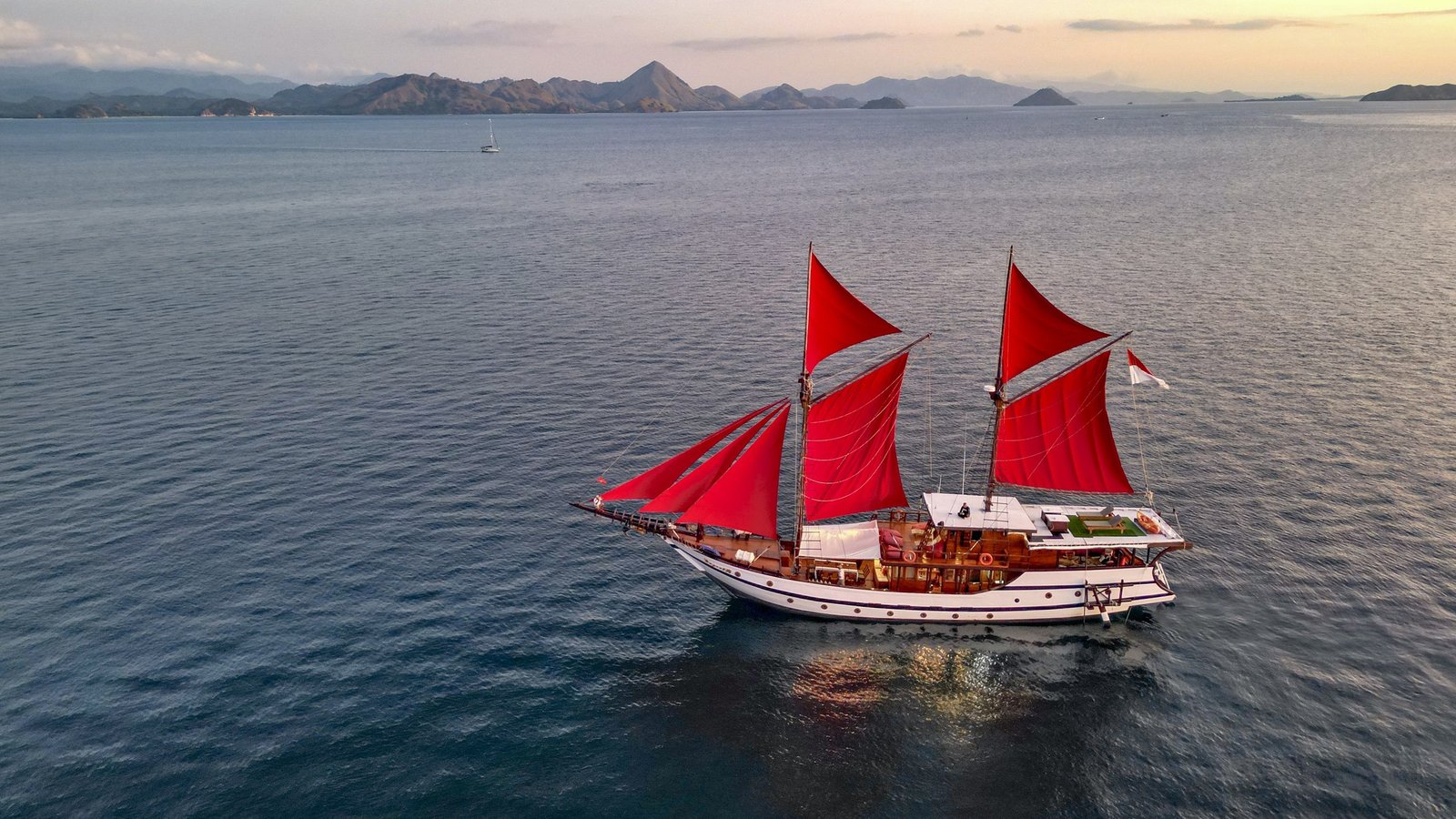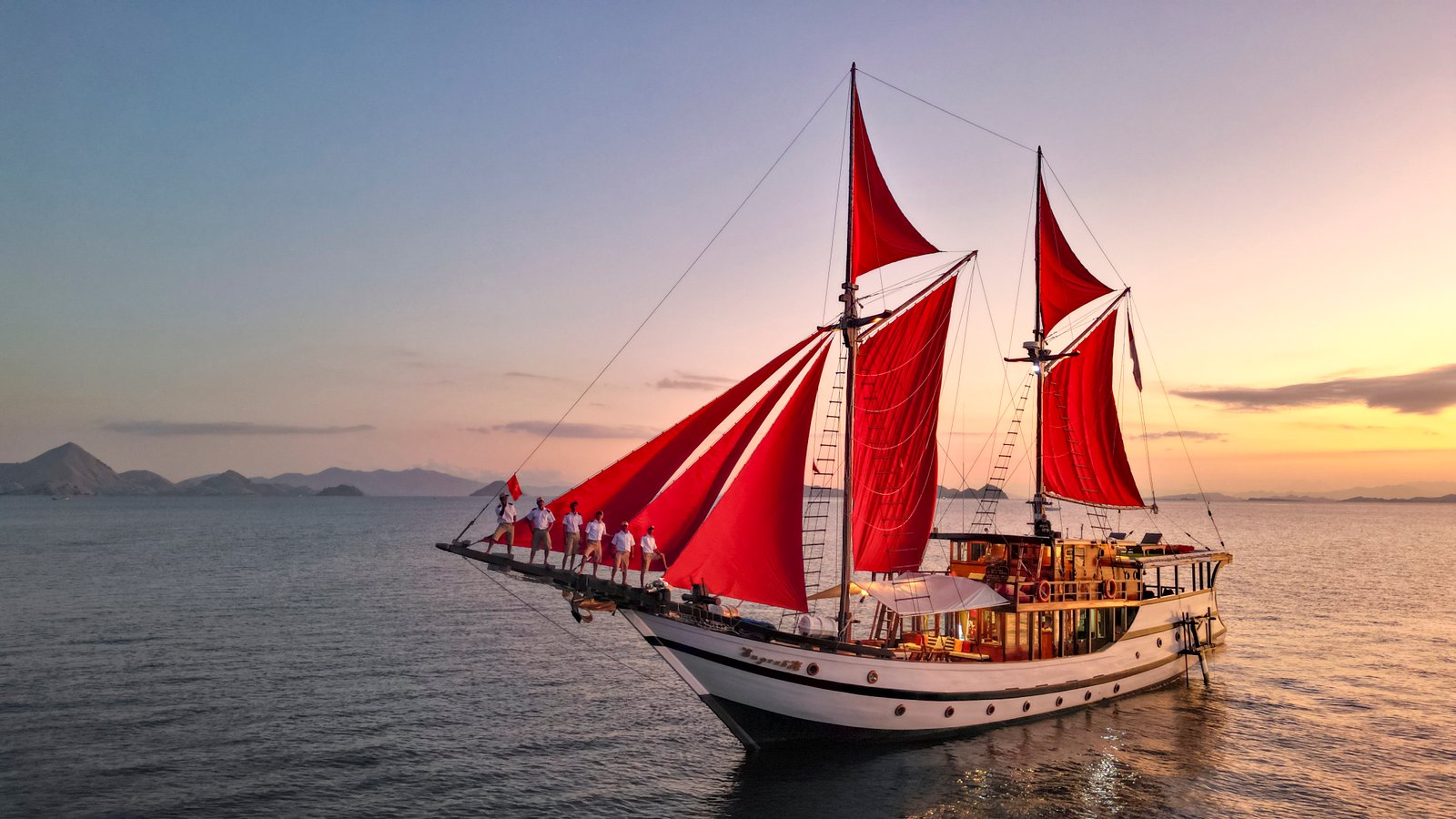
Ask what a phinisi is and the easiest answer is to point toward a wooden sailing vessel with high masts moving through Indonesia. That answer is useful, but incomplete. The word is tied to a far older body of knowledge: the way communities in South Sulawesi understand a sailing rig, shape a hull, organise the work of a boatyard and carry maritime skills forward without reducing the craft to a set of industrial drawings.
That distinction matters because the phinisi has become one of the most recognisable forms in Indonesian travel. Modern vessels now carry divers through Raja Ampat, families through Komodo and private groups between remote islands. Yet the visual appeal of these boats is only the surface. Their deeper story belongs to the coastal communities whose livelihoods, language and identity have long been connected to the sea.
For travellers aboard Supraba, understanding that history changes the vessel from a beautiful object into something more specific: a contemporary expression of an Indonesian maritime tradition that continues to evolve.
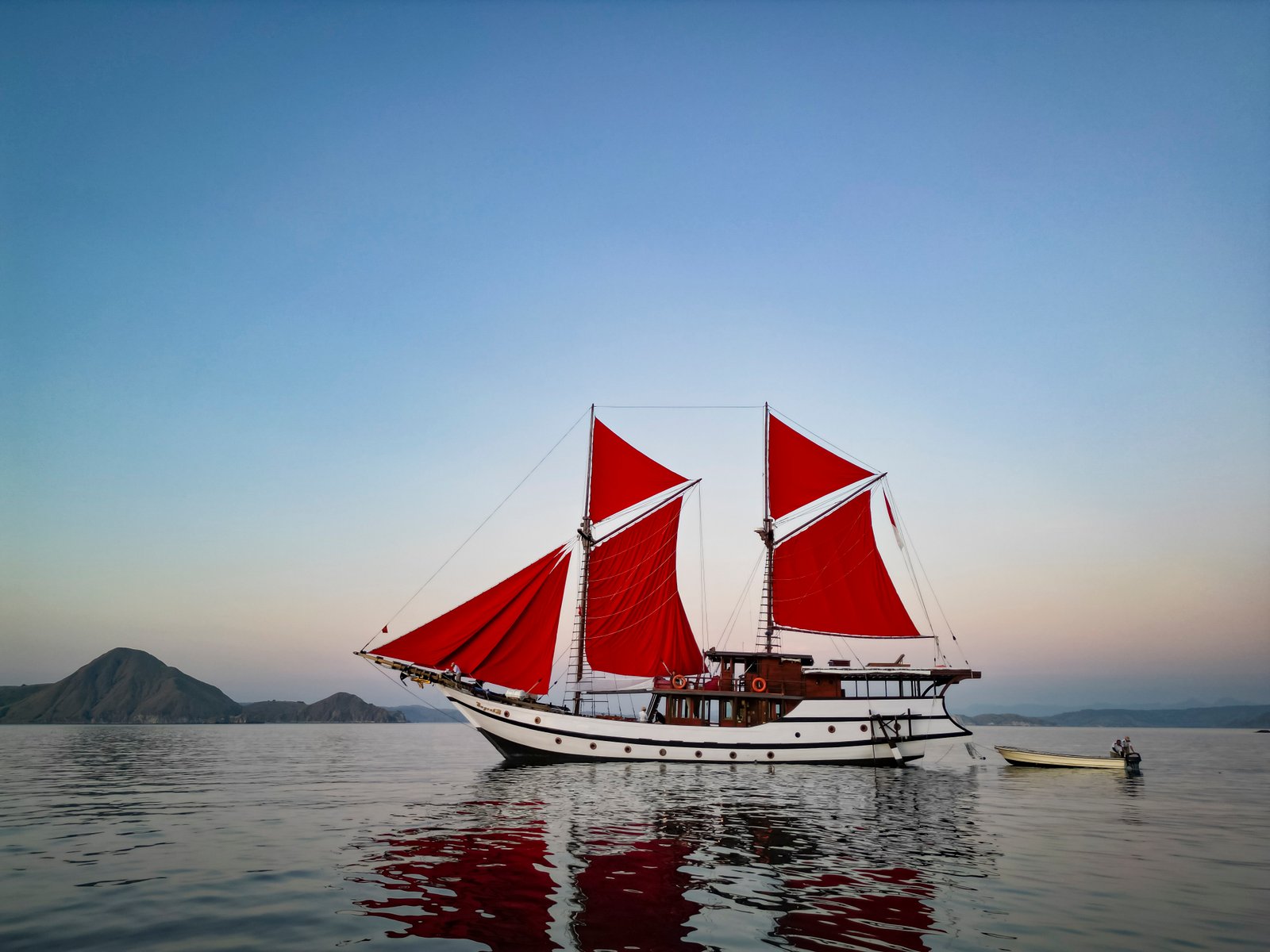
So, what is a phinisi?
In everyday travel language, phinisi is often used to describe the entire wooden vessel. UNESCO gives the term a more precise meaning. In its inscription for the Pinisi, art of boatbuilding in South Sulawesi, UNESCO explains that pinisi refers to the rig and sails associated with the famed Sulawesi schooner, while the heritage itself encompasses the wider knowledge involved in constructing and operating the boats.
This is an important correction to the simplified idea that a phinisi is a single, fixed boat design. Indonesian wooden vessels have taken different hull forms over time. What connects them is not one frozen blueprint, but a living system of building, rigging, launching and sailing knowledge.
The most useful way to understand a phinisi is not as a museum object, but as a tradition that survives because people still know how to build, adapt, maintain and sail these vessels.
The tradition comes from South Sulawesi
The cultural heart of phinisi boatbuilding lies in South Sulawesi. UNESCO identifies Tana Beru, Bira and Batu Licin as important boatbuilding centres, places where construction and seafaring remain closely connected to community life.
Much of the craft is associated with Konjo-speaking communities in the Bulukumba region, alongside the wider maritime cultures of South Sulawesi. The boats are often discussed internationally under broad labels such as Bugis or Makassarese sailing vessels, but the actual tradition is rooted in specific coastal communities with specialised knowledge and long-standing roles within the building process.
That knowledge is not only technical. It includes decisions about timber, proportions, the order in which a hull is assembled, the responsibilities of different craftsmen and ceremonies associated with beginning construction and launching a completed vessel.
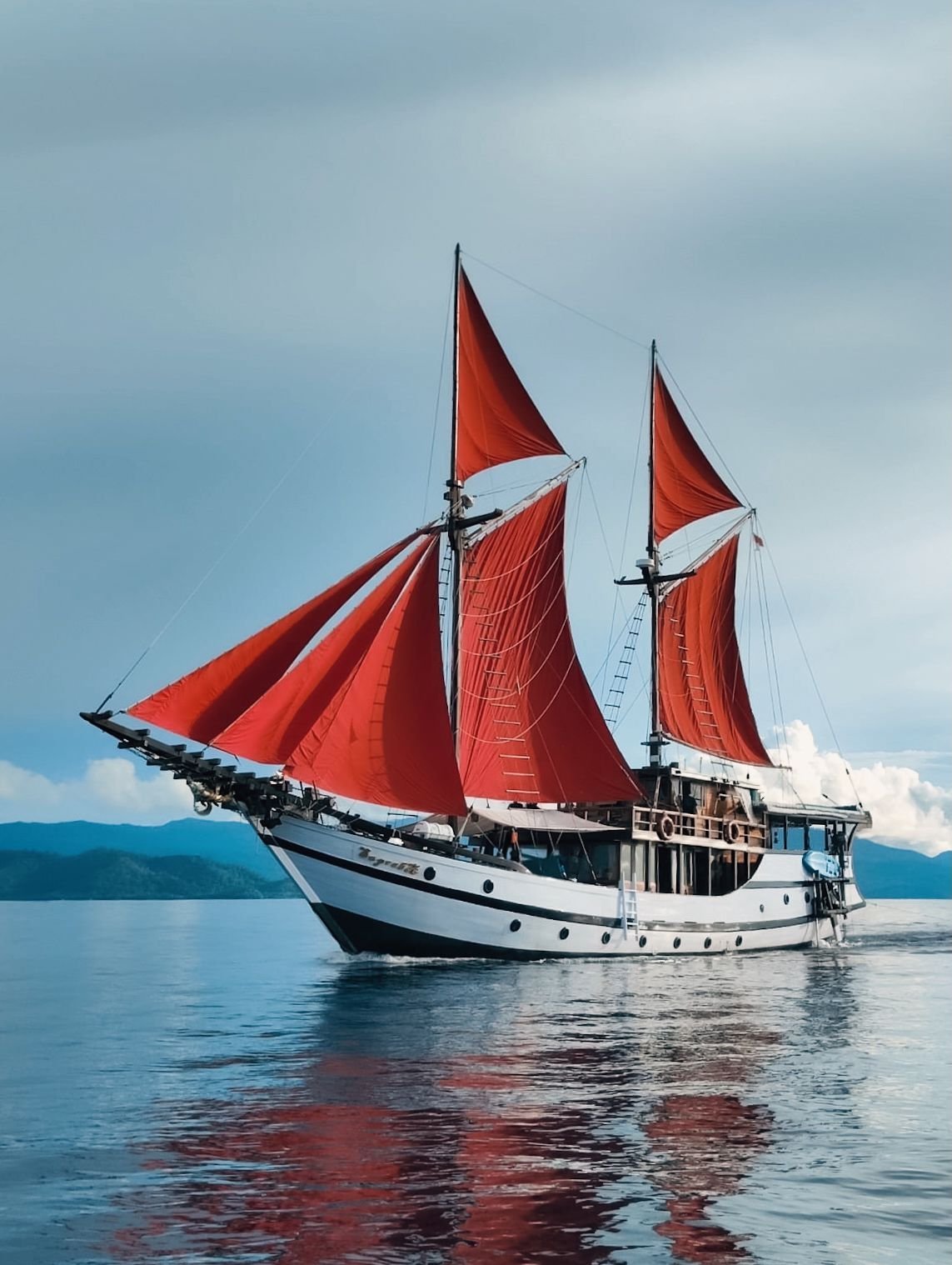
Built through inherited knowledge rather than a conventional shipyard formula
One of the most remarkable parts of the South Sulawesi tradition is the way knowledge moves between generations. Indonesia's official tourism material describes a building process grounded in inherited practice rather than dependence on modern blueprints. Skilled builders work from proportions, experience and a body of practical knowledge refined through repeated construction.
The work begins long before a vessel resembles a boat. Timber has to be selected, prepared and shaped. The keel establishes the foundation. Planks are fitted into the hull with careful attention to curvature and strength. Frames, decks, cabins and superstructure follow. The sequence matters because the form emerges through the logic of the build rather than being assembled from prefabricated modules.
Traditional methods have never meant that every vessel must remain unchanged. Engines, navigation systems, electrical equipment, watermakers, safety equipment and contemporary accommodation have become part of many modern phinisi. The living tradition has survived partly because builders have been able to absorb new requirements without abandoning the identity of the craft.
What UNESCO actually recognised
In 2017, UNESCO inscribed Pinisi, art of boatbuilding in South Sulawesi on the Representative List of the Intangible Cultural Heritage of Humanity. The wording is significant. UNESCO did not designate a particular boat as a World Heritage Site, and it did not declare that every wooden charter vessel in Indonesia automatically represents protected heritage.
The recognition concerns intangible cultural heritage: the knowledge, practices and social traditions surrounding the art of building and using these vessels. That includes the people who hold the knowledge and the communities in which the craft remains meaningful.
This is also why the heritage is difficult to understand from photographs alone. A finished vessel can be documented easily. The knowledge behind the finished vessel lives in people, relationships, vocabulary, judgement and repeated practice.
The UNESCO inscription is for the art of boatbuilding in South Sulawesi. It recognises a living body of knowledge and practice, not a commercial category of yacht and not one standardised hull design.
Why the rig became so recognisable
The classic phinisi profile is dominated by two masts and a fore-and-aft sailing arrangement. Historically, this rig helped Indonesian trading vessels move through the archipelago while carrying substantial cargo. The exact arrangement evolved, as working boats always do, in response to trade, materials and changing technology.
For modern travellers, the rig is often the first feature that makes a phinisi instantly recognisable. The sails create the dramatic outline seen in photographs from Komodo or Raja Ampat, but they are not merely ornamental references to the past. On vessels designed to carry sail, they remain part of the maritime character and seamanship of the boat, even when engines provide the dependable propulsion required for modern itineraries and schedules.
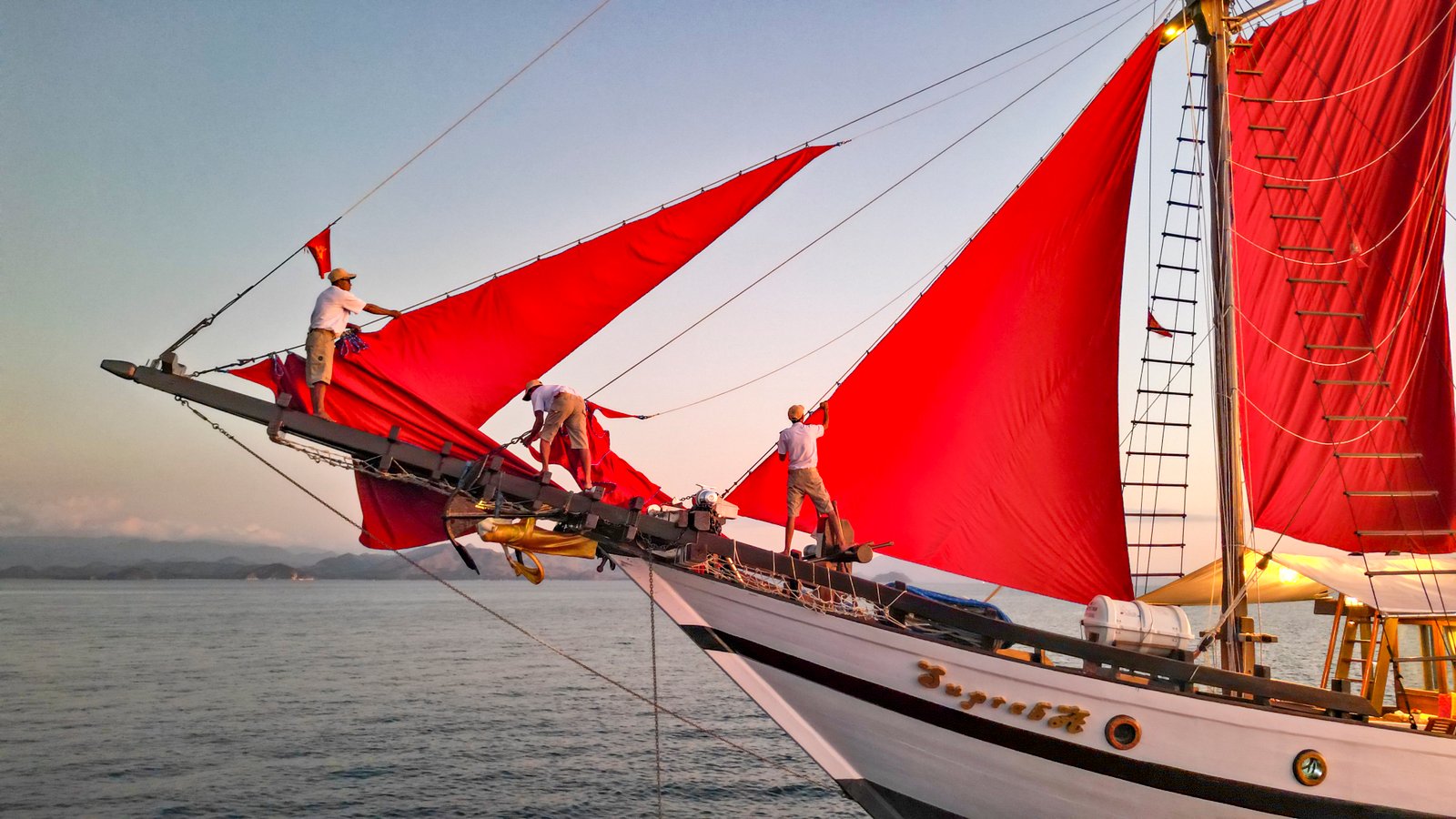
From trading vessel to modern liveaboard
For generations, wooden sailing vessels linked islands, ports and trading communities across Indonesia. Cargo, food, building materials and people moved by sea because the archipelago itself made maritime transport essential.
Modern phinisi liveaboards serve a different purpose. Their interiors are arranged around guests rather than cargo. Private cabins replace working holds. Dive decks, tenders, shaded dining areas and lounges support journeys built around exploration. Navigation, communications and safety systems reflect contemporary expectations.
Yet the transformation is not as strange as it may first appear. Both the trading vessel and the expedition liveaboard are solutions to the same geography: thousands of islands separated by water, many of them best reached by sea.
Supraba's accommodation and shared spaces show how that older maritime form can be adapted for present-day life aboard without trying to disguise the fact that the vessel is made of timber and shaped by hand.
What makes a modern phinisi different from a conventional yacht?
The difference is not simply that one is wooden and the other is not. A modern phinisi carries visible evidence of the way it was built. Timber grain, structural members, deck proportions and the relationship between indoor and outdoor spaces give the vessel a character that is difficult to reproduce in a production yacht mould.
There is also a different sense of scale. Many phinisi liveaboards are relatively intimate vessels. Guests share meals, move between dive tenders and decks, and spend long periods close to the sea rather than inside a sealed interior. This makes the vessel itself part of the journey rather than a neutral platform between destinations.
That does not mean a phinisi should be romanticised as primitive. A serious expedition vessel must combine traditional construction with modern systems. Guests should still look carefully at safety equipment, crew experience, cabin ventilation, water production, electrical systems, navigation and dive operations. The Supraba safety information explains how these practical requirements sit alongside the traditional character of the vessel.
Timber construction, South Sulawesi boatbuilding knowledge and the characteristic sailing rig connect the vessel to a living maritime tradition.
Engines, navigation, communications, electrical systems, water production and safety equipment allow the vessel to operate as a contemporary expedition platform.
Private cabins, dining spaces, sun decks and activity areas adapt the working vessel form to longer leisure journeys.
The design remains especially suited to an archipelago where the most meaningful journeys often unfold between islands rather than at a single resort.
The phinisi is part of the journey through Indonesia
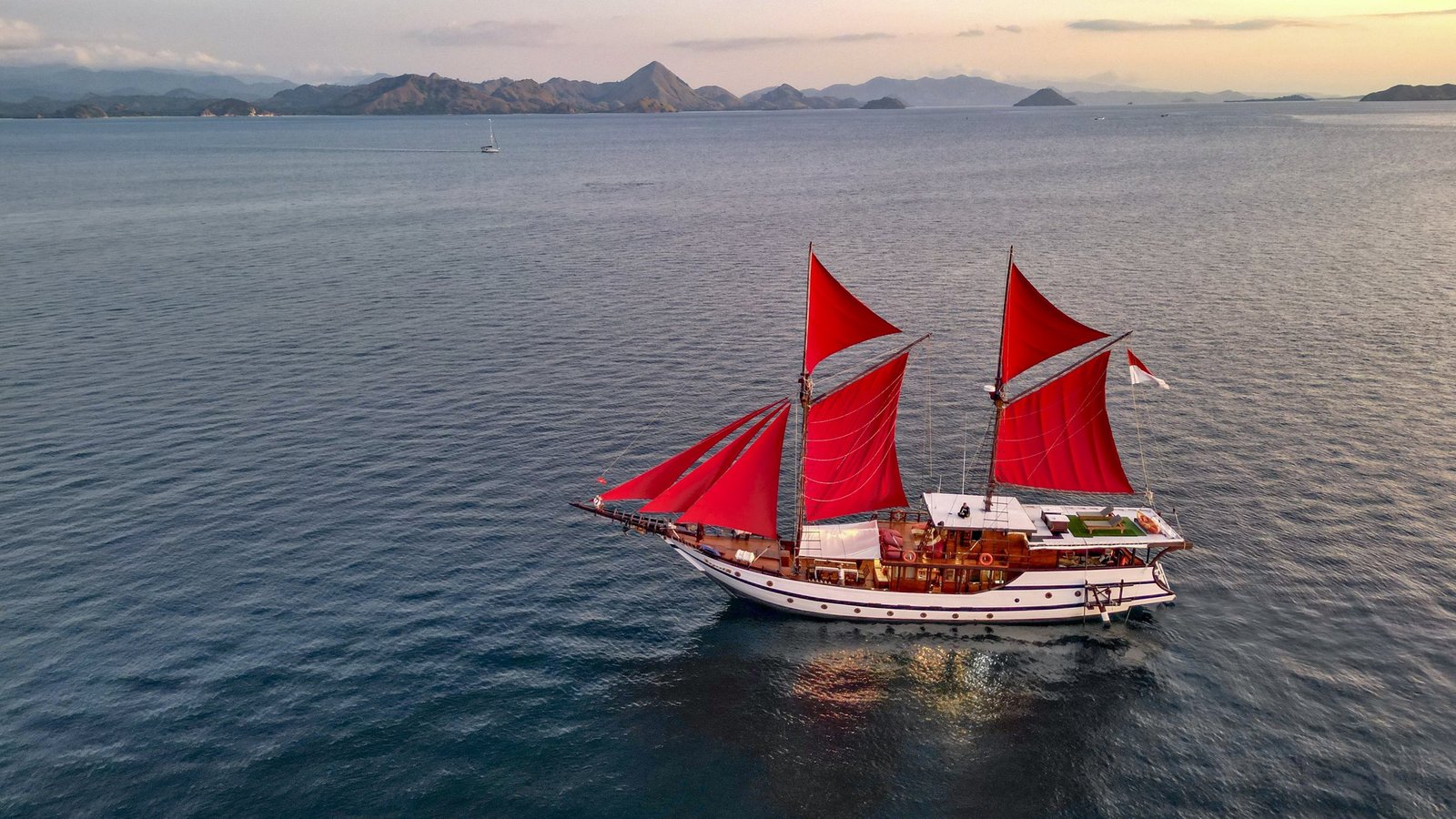
There is a reason phinisi vessels now appear so frequently in images of eastern Indonesia. The form belongs visually and historically to the archipelago. Sailing through limestone islands, volcanic channels or broad open seas aboard an Indonesian-built vessel creates a connection between transport, place and culture that a generic hotel experience cannot reproduce.
That connection is especially clear on longer routes. In Raja Ampat, a vessel may move between island groups separated by open water. In Komodo, it becomes the base for diving, shore landings and nights at anchor. On Banda Sea expeditions, the boat has to carry guests comfortably across much greater distances between remote islands.
The vessel is therefore not only an aesthetic choice. It is part of how the landscape is experienced.
Why the tradition still matters
Heritage survives when it remains useful to the people who hold it. The continuing demand for traditionally built Indonesian vessels gives the craft an economic life, but that growth also creates responsibility. A boat that borrows the visual language of a phinisi without respecting the builders, materials or knowledge behind it can reduce a living tradition to decoration.
For travellers, learning the background is a small way of seeing more clearly. It becomes possible to distinguish between the image of a traditional boat and the culture that produced it. It also places the experience of sailing Indonesia inside a much longer maritime history.
Supraba's own story begins within that context. The About Supraba page looks at the people and ideas behind the vessel, while The Vessel shows how the traditional form has been arranged for contemporary journeys through Indonesia.
A living ship, not a relic
The most interesting thing about the phinisi is that its story has not ended. These vessels are still being built. Builders are still learning from builders. Timber is still shaped into hulls that will leave South Sulawesi and spend years travelling between Indonesian islands.
The purpose has changed. The technology has changed. Guest expectations have changed. The sea, however, still defines the vessel. A phinisi remains meaningful because it belongs to a culture that learned to build for an archipelago and continues to adapt that knowledge for the journeys people make today.
For anyone planning to experience that relationship firsthand, the next step is not simply to find a beautiful boat. Explore the destinations Supraba sails, understand the vessel itself, and choose a voyage where the route gives time to experience life between islands rather than only collecting stops on a map.
Cultural background in this article draws on UNESCO's inscription Pinisi, art of boatbuilding in South Sulawesi and Indonesia's official tourism information on the pinisi tradition. The term is commonly used today for the vessels themselves, although UNESCO's description more precisely identifies pinisi with the rig and sail within the broader South Sulawesi boatbuilding tradition.